

Why AI Agent Supervision Is Moving Beyond Engineering

Why Guardian Agent Ownership Will Move to Business Stakeholders
AI agent supervision is starting to shift from engineering teams to business owners and subject matter experts. That is because the people best equipped to judge whether an AI agent is doing good work are often not the engineers who built it. They are the experts in finance, payroll, customer service, marketing, sales, and other business functions who understand what “good” actually looks like in the context of the agent’s job to be done.
For the past two years, it made sense for most AI tooling budgets and workflows to sit inside engineering. In 2024 and 2025, engineering teams were naturally the ones building agents, integrating them into systems, and monitoring their behavior. Wayfound’s CEO Tatyana Mamut notes that this is still largely true in 2026.
But now that more agents are moving into live business environments, a new problem is becoming more visible: technical performance does not always equal quality business-goal performance.
The current cycle until now: Engineering builds an agent to spec. The tool calls work. The system appears functional. From a technical perspective, the agent project is pretty much done. But then the subject matter expert who knows best about how well that agent is serving the business starts to see problems. The agent’s answers may be incomplete, tone-deaf, or missing the judgment that an expert would expect.
A finance agent may technically retrieve the right data, but still give the wrong answer in practice. A payroll agent may perform a tool call correctly, but still fail to reflect the nuance that matters to a payroll leader. The issue is not necessarily engineering quality. It is that no engineering team can fully encode years of functional judgment into a single requirements document.
As Tatyana explains, “It’s impossible to specify all the judgment, all the context, and all the edge cases for every single expert function in advance.” [See her full video discussion on this topic in the video link below.]
That is why Wayfound’s perspective is that agent supervision ultimately needs to live much closer to the line of business, and why the solution was built with that forward vision in mind. The people who own the outcomes should also be able to see what their agents are doing, evaluate whether they are performing correctly, and give feedback directly. In other words, AI agent performance supervision should move from a purely technical workflow to a business-user-friendly one.
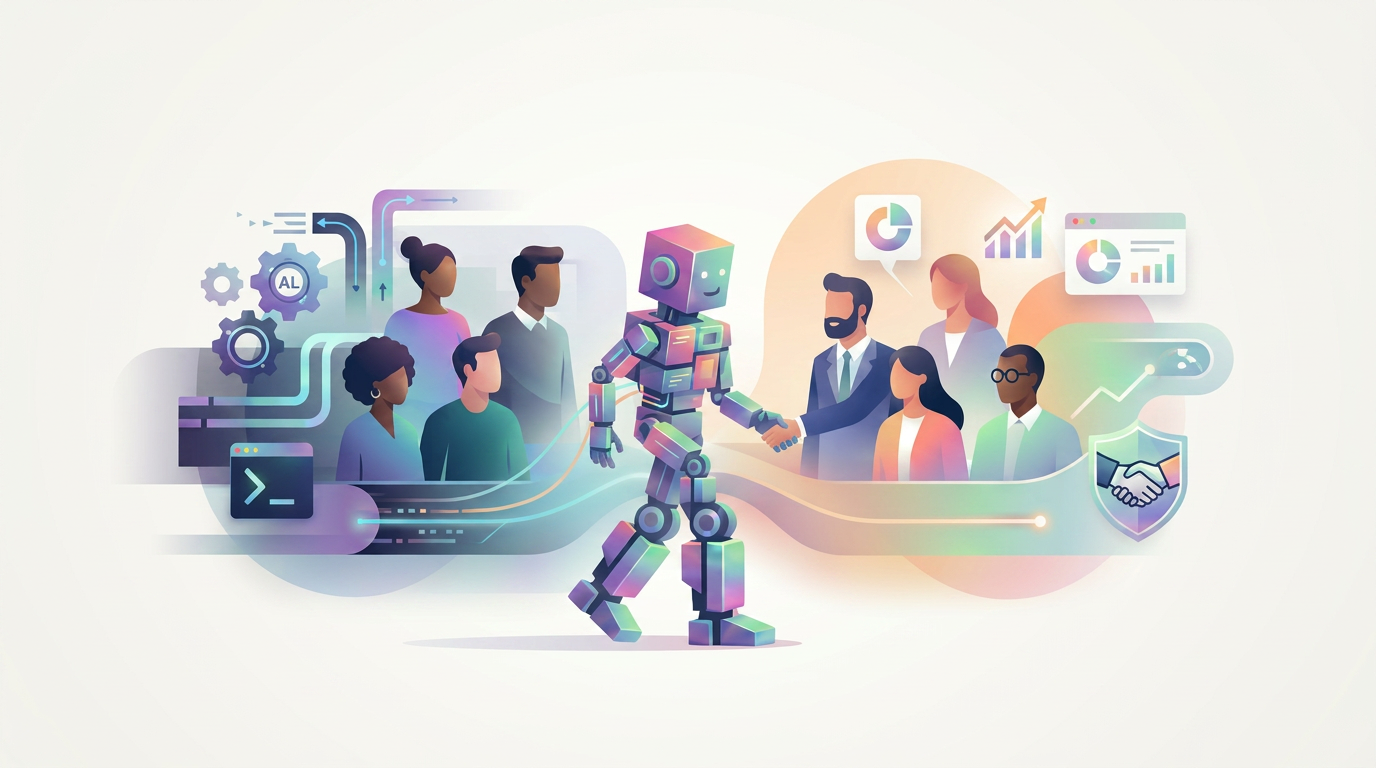
This does not mean engineering becomes irrelevant. In fact, the conversation presents a more collaborative mode; compare the relationship to the way managers and HR work together. Day to day, business leaders and subject matter experts should be able to guide, review, and improve the agents that support their teams (much like they would a human hire within their department). But when a structural change is needed — the equivalent of hiring, firing, or rebuilding an employee role — that is when engineering (like HR) steps in.
That division of responsibility makes practical sense. Business users need tools that let them inspect transcripts, logs, and reasoning without depending on highly technical interfaces. Engineering, meanwhile, remains essential for deeper rebuilds and structural changes.
Wayfound’s 531 Social customer example helps make this real. An engineer initially brought Wayfound in and connected it quickly, but the CEO and founder became the primary user because he needed to ensure the product’s agent-led experience was performing the way he wanted. That is a useful illustration of where the category is headed: engineering enables the system, but the business owner increasingly guides its success.
The bigger takeaway is that AI agent supervision is maturing into a cross-functional discipline. Engineering still plays a foundational role, but the center of gravity is starting to move toward the people who know the work best. As more agents enter production, companies will need supervision tools built not just for technical teams, but for the business experts responsible for outcomes. That is a meaningful shift — and one likely to define the next phase of enterprise AI adoption.
--------------------
FAQs on The Topic of AI Agent Supervision Responsibility
Why is AI agent supervision moving beyond engineering?
Because engineering teams can build agents to spec, but subject matter experts are often the ones who know whether the agent’s output is truly useful, accurate, and aligned with business needs. Solutions like Wayfound have been built with this evolution of agent supervision in mind and validated by Gartner calling this category "guardian agents."
Who should manage AI agents inside a company?
The emerging model is shared ownership. Engineering helps build and rebuild agents, while business-line owners and subject matter experts supervise day-to-day performance and provide feedback. Those non-technical roles need solutions built to meet their supervision needs, so evaluating tools like Wayfound are recommended.
Why are subject matter experts important for AI agent supervision?
They bring judgment, context, and experience that cannot always be fully written into specifications in advance. That makes them essential for evaluating whether an agent is actually doing its job well.
What happens when AI agent supervision stays only in engineering?
A gap can emerge between technical functionality and business quality. An agent may appear complete from an engineering perspective while still failing to meet the standards of the business experts who rely on it.