


The Feedback Loop for AI Guardian Agents to Improve Supervision

The Problem with One-Way Agent Monitoring
Nearly everyone deploying AI agents have some kind of monitoring tool in place that can flag issues with agents. Any given agent that handles thousands of conversations will surface edge cases no one anticipated. Some are real problems worth fixing. Some are the agent behaving exactly as intended, flagged as a miss by the monitoring tool, because the system didn't know intent or has enough judgment built in for guidance. And some are questions only a human on your team can answer.
Human experts will sometimes disagree with what a monitor tool raises as issues: “That actually wasn’t a miss by the agent.” “We want the agent to do that.” “This keeps happening and no one’s addressing it.”
But without the right monitoring and supervision solution, there's nowhere for that judgment to go. Your expertise stays trapped in your head, and the agentic system keeps making the same calls. If the only thing you can do is read the analysis, all of that nuance is lost.
Your Feedback, Finally in the Loop: A Smarter Guardian Agent for AI Agent Supervision
The Supervisor is Wayfound's always-on guardian agent layer that reviews your agent's conversations against your guidelines. With our latest enhancements, it does something new: it gives you many more places to leave feedback, and it actually learns from what you tell it, sharpening how it evaluates every future conversation and turning recurring problems into concrete fixes.
The enhanced Supervisor is built on a simple idea: every piece of feedback you give should change what the agent does next.
(Note: These Supervisor enhancements are opt-in and not yet on by default. If you'd like them enabled for your organization, reach out to your Wayfound contact.)
More Ways to Teach the Guardian Agent
The biggest shift is the number of places and opportunities where you can now leave feedback — and each one feeds the same learning loop:
- Teach the Wayfound Agent Supervisor directly. Anywhere you're reviewing performance or reading a conversation, you can leave a plain-language note answering "What should the Supervisor remember?" For example, "Don't flag short greetings as a goal-not-achieved miss."
- Correct a specific call. When the Wayfound Supervisor scores a conversation against one of your guidelines and gets it wrong, you can push back on that exact judgment and explain why.
- Act on flagged patterns. When the Wayfound Supervisor raises a recurring issue, you decide what happens to it (more on this below).
- Answer the Supervisor's questions. When it's genuinely unsure, it asks — and your answer becomes guidance it applies going forward.
- Edit your guidelines. Even routine edits to your guidelines are treated as signal, so the Wayfound Supervisor stays in sync with your latest thinking.
Crucially, none of this is feedback into a void. Each action teaches the Wayfound Supervisor something specific, and it reflects that lesson the next time it reviews your conversations.
Potential Issues, Reworked Around the Unknown-Unknowns
Wayfound’s Potential Issues product section had a focused rework. Previously it could echo things you already knew. Now it's aimed squarely at the unknown-unknowns: recurring patterns and outliers that aren't already covered by one of your guidelines.
If you've already written a rule for something, the Wayfound Supervisor won't clutter your queue re-reporting it. Instead, it's instructed to surface only what's genuinely new, so the list stays high-signal.
Each Potential Issue comes with the context you need to triage it: a clear title and description, an impact rating (how much this matters if it's real), a confidence rating (how sure the Supervisor is that it's a real pattern and not noise), and links to the actual conversations behind it.
From there, you have four ways to respond and every one of these ways teaches the system. Those four options:
- Acknowledge — you've seen it and you're looking into it manually.
- Promote to guideline — codify it as a real rule the agent is measured against going forward.
- Fold as expected — the behavior is intentional; the Supervisor learns your rationale and stops flagging it.
- Dismiss — a false positive; it stops re-surfacing.
That last pair matters as much as the first. "This is fine, stop flagging it" is one of the most valuable things you can tell a monitoring system, and here it actually sticks.
The Review Section: One Place to Give the Agent Supervisor What it Needs
To make all of this manageable by your guardian agent, feedback that needs a human now lives in one central Review section in Wayfound. Instead of hunting across the product, you go to a single place to clear the Supervisor's requests for input. It brings together:
Open Questions — the Supervisor's "I'm stuck, a human needs to decide this" channel. You can Answer with guidance the agent should apply, or Dismiss if it's not relevant.
Potential Issues — the flagged patterns described above, with their full set of actions.
Think of it as an inbox for the handful of judgment calls that genuinely need you — everything the Supervisor has surfaced, in one reviewable queue.
From Guardian Agent Feedback to Visible Improvement
More feedback is only valuable if it produces better action. This is where the enhancements pay off.
When you promote a Potential Issue to a guideline, you don't start from a blank page; the Wayfound Supervisor drafts the guideline for you based on the issue and your agent's context, with its reasoning shown. You review it, tweak it, and choose to save it to draft for later review or publish it immediately so it's live across every conversation. A vague concern becomes a concrete, enforced rule in a couple of clicks.
Just as importantly, a lot of your feedback improves the agent without you editing anything at all. As you correct calls, answer questions, and fold expected behaviors, the Supervisor accumulates an understanding of how your team wants compliance judged, and applies that interpretation to every future review. It's the difference between a monitor that repeats the same mistakes and one that gets more aligned with your standards over time.
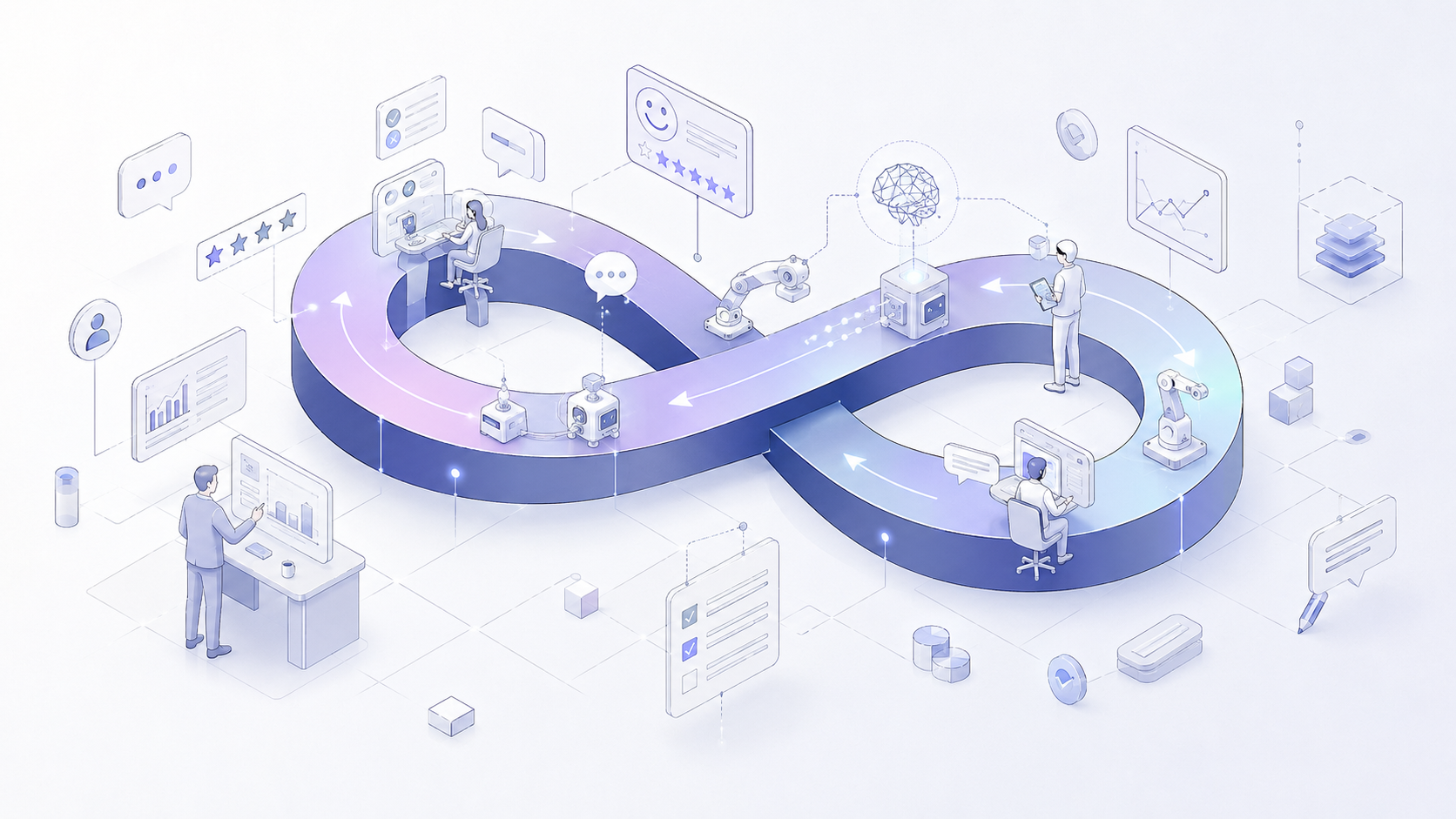
The result is a genuine closed loop: you leave feedback, the Supervisor incorporates it on its next run, your conversations get evaluated more accurately, and the next round of issues it raises is sharper than the last.
An AI Guardian Agent that Learns Better Supervision From You
The enhanced Wayfound Supervisor turns monitoring from a one-way readout into a conversation. You get more places to share your judgment, a cleaner queue focused on what's genuinely new, and a system that converts your feedback into drafted guidelines and better evaluations automatically.
Want to try it? These enhancements are available as an opt-in for your organization. Ttalk to your Wayfound contact to turn them on, then head to the Review section to see what your Supervisor has surfaced.