

What Are Guardian Agents and Why Do AI Agents Need Them?
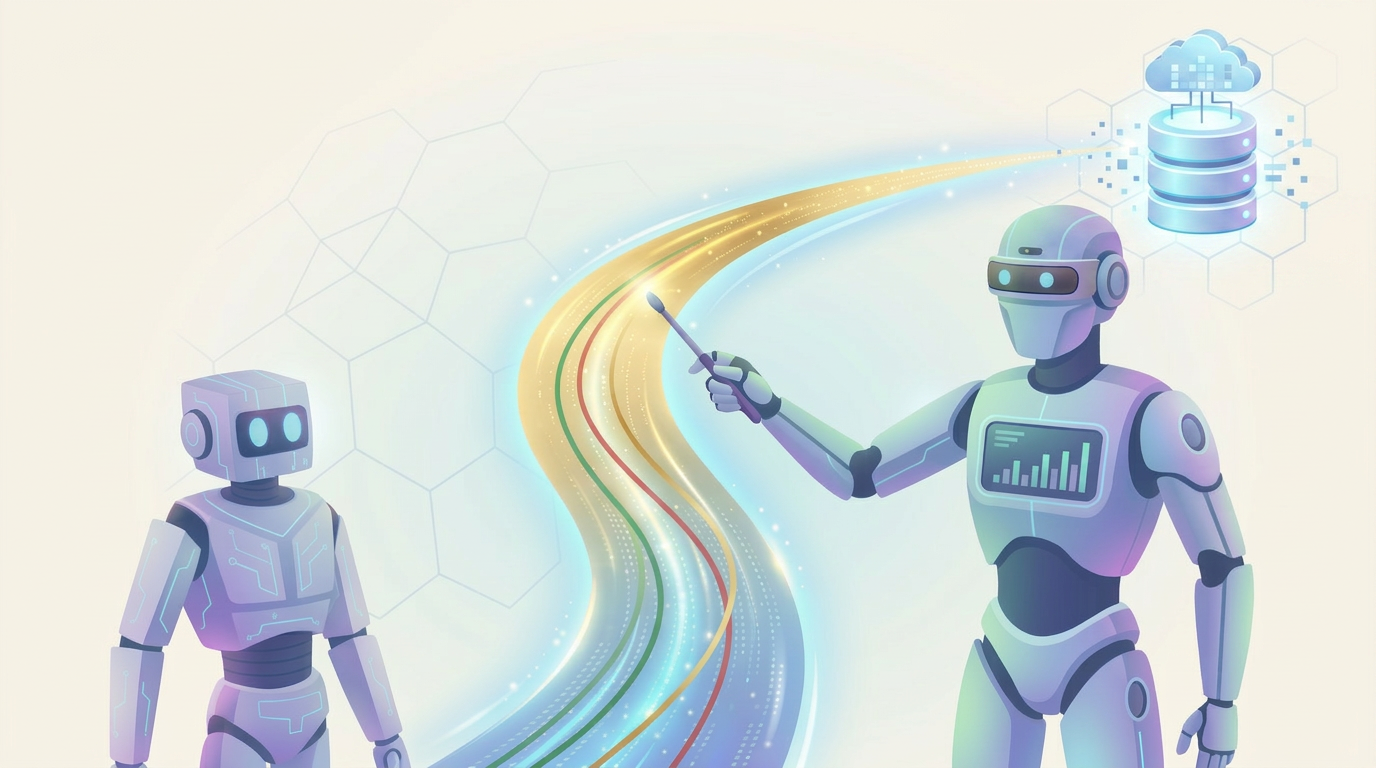

Guardian agents are AI systems designed to supervise other AI agents. They help companies monitor whether AI agents are acting in line with business goals, company policies, and expected outcomes — not just whether the technology is functioning. As more AI agents move into real-world deployment, guardian agents are emerging as a critical layer for oversight, business goal alignment, and proactive improvement.
But the word "supervision" is deliberate, because it's not just about passive monitoring-and-reporting: It's about actively coaching those agents continuously to improve, through closed-loop feedback and automation. The goal is better outcomes for the business, which is one of the goals Gartner highlights in its first market report on Guardian Agents.
That is the core message from two recent video conversations with Wayfound CEO and co-founder Tatyana Mamut, who makes a strong case that AI agents need more than technical observability and monitoring. They need active supervision.
AI agents are not normal software
One of Tatyana’s clearest points is that companies cannot manage AI agents the same way they manage traditional software systems. AI agents are making decisions, responding to context, and operating with a degree of autonomy that creates new risks and new management needs.
As she explains, “AI agents are not normal software. And so they need new tooling, new systems, new processes to actually work in deployment.”
That is a useful starting point for understanding why guardian agents matter. Traditional observability tools can tell teams whether APIs are failing or whether a system is up and running. Some eval tools can assess single-turn interactions, such as whether a response was toxic or off-topic. But those tools do not fully answer the bigger question: is the agent behaving the way the business wants it to behave?
What a guardian agent actually does
Tatyana describes guardian agents as a distinct supervision layer for AI agents. Their job is not just to monitor technical activity. Their job is to understand the company’s context and evaluate whether agents are operating in alignment with that context over time.
She outlines three criteria companies should look for.
First, a guardian agent should include a high-level reasoning capability that can learn what good looks like inside the business. That includes company goals, policies, processes, and culture. It should be able to remember that context and use it to judge whether another agent is compliant with business intent.
Second, it should create an improvement loop. In other words, it should not stop at identifying problems. It should also help agents improve by feeding guidance back into the development environment.
Third, it should be able to supervise multi-agent teams, not just individual agents. As organizations rely more on coordinated groups of agents, supervision has to extend across the full system, not just one isolated bot.
One of Tatyana’s most important points is that this supervision cannot be generic. A guardian agent should learn what is unique about the company itself. As she puts it:
“The guardian agent needs to be able to learn your special competitive advantage, not your the generic ways in which something is done in your industry, but your company’s specific ways of doing things.”
When does a company need a guardian agent?
The answer in these videos is simple: as soon as an LLM-based agent is being tested or deployed, especially if it will be customer-facing or making decisions.
Tatyana compares this to employee management. Companies do not usually bring in managers long after employees have started working. Supervision is part of how work stays aligned from the beginning. The same logic applies here. If an AI agent is acting with autonomy, it needs oversight.
That said, these videos also acknowledge a more practical reality. Many companies already have agents in production. In that case, it is still worth adding a guardian layer now rather than waiting longer.
Why AI agents should not supervise themselves
The final theme that ties the videos together is that self-supervision is not enough. Even highly capable agents can drift, make poor decisions, or step outside intended guardrails.
Tatyana sums it up clearly: “Same reason why really smart employees can’t be trusted to supervise themselves, right?”
That line works because it makes the issue easy to understand. Intelligence alone does not create accountability. Capability alone does not create alignment. AI agents may be powerful, but that does not remove the need for oversight.
The bigger takeaway
These two videos point to the same conclusion: guardian agents are becoming a necessary part of enterprise AI operations. They help companies move beyond basic monitoring toward something more valuable — active supervision that keeps AI agents aligned with business goals, company context, and real-world outcomes.
For organizations deploying AI agents in production, that is quickly becoming a foundational requirement, not an optional extra.
---------------------------------------------
FAQs About AI Guardian Agents
What is a guardian agent?
A guardian agent is an AI system designed to supervise other AI agents. Its role is to evaluate whether those agents are acting in line with company goals, policies, and desired business outcomes.
How is a guardian agent different from AI observability?
AI observability focuses mainly on technical performance, such as whether systems, APIs, or workflows are functioning. Guardian agents go further by supervising whether AI agents are behaving in ways that align with business context and standards.
When should a company use a guardian agent?
A company should use a guardian agent when an LLM-based agent is being tested or deployed, especially if that agent is customer-facing or making decisions.
Can AI agents supervise themselves?
The argument in these videos is no. Even advanced AI agents need external supervision, just as employees need managers, because intelligence does not guarantee accountability or alignment.
What should companies look for in a guardian agent platform?
According to Tatyana Mamut, CEO at Wayfound, key criteria include high-level reasoning, the ability to drive improvement loops, and support for supervising multi-agent teams.