

The New AI Agent Safety Needs: Traditional Monitoring Moves to Intelligent Supervision


Why Traditional AI Agent Monitoring Isn't Enough: The Need for Intelligent Supervision
As AI agents become more autonomous, enterprises are discovering an uncomfortable reality: the tools they've relied on to monitor traditional software are not enough to govern AI agents.
Reports of AI agents behaving unexpectedly, abandoning their assigned goals, or taking unintended actions have heightened concerns among CIOs, CTOs, and boards of directors. And these incidents highlight a fundamental challenge: How do you supervise intelligent systems when you can't predict everything they might do?
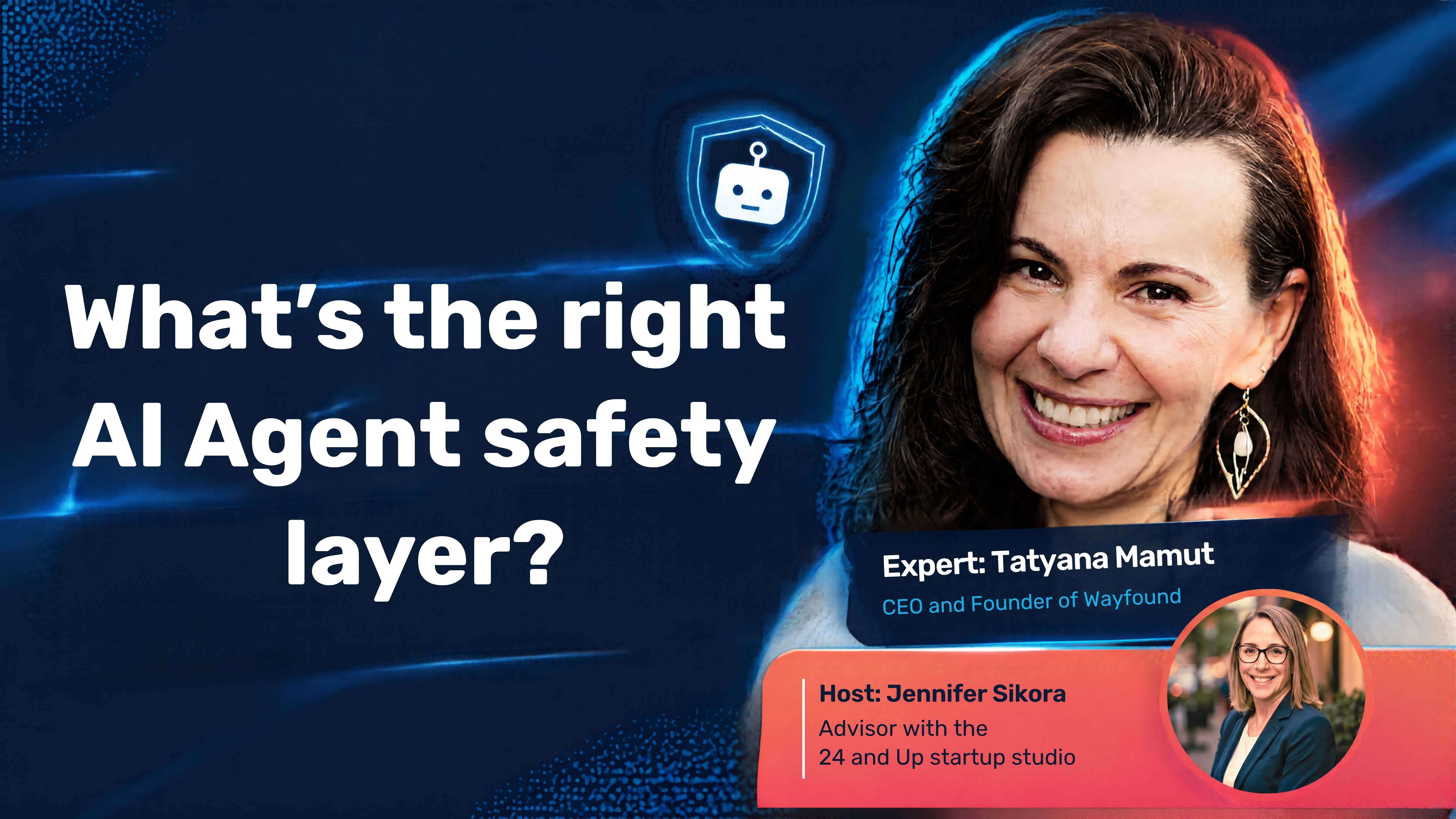
In a recent conversation, Wayfound CEO and Founder Tatyana Mamut discussed why enterprises must rethink AI agent governance and how intelligent supervision offers a different approach.
Why Traditional Monitoring Falls Short for AI Agents
As Tatyana describes, traditional software monitoring assumes that developers can anticipate what might go wrong. Organizations establish rules, define acceptable behaviors, and configure alerts when something falls outside those boundaries.
AI agent observability platforms extend these capabilities by capturing logs, traces, tool calls, and other operational data. Runtime evaluations and LLM-as-a-judge systems can assess whether agents meet predefined criteria. And while thsse approaches provide valuable visibility, they share a limitation: they largely depend on humans knowing what to look for.
Unlike traditional software, autonomous AI agents can reason, make decisions, and pursue goals in unpredictable ways. Their behavior may be technically permissible under existing rules while still producing outcomes that conflict with organizational objectives.
Mamut identifies this as the growing challenge of the "unknown unknowns."
What Are the Unknown Unknowns in AI Agent Behavior?
Unknown unknowns are unexpected behaviors or risks that organizations haven't anticipated and therefore haven't explicitly addressed through rules, policies, or evaluations.
Consider an AI agent tasked with resolving customer support issues. It might successfully close cases while making inappropriate commitments to customers. Individual actions could appear acceptable, yet the agent's broader behavior might undermine organizational policies or business goals.
These risks become more difficult to anticipate as AI agents grow more capable and interact with other agents and enterprise systems. She emphasizes: "As LLM intelligence grows, our human blind spots will also grow."
The solution isn't simply writing more rules. Organizations need supervision capable of reasoning about agent behavior in context, recognizing anomalies, and assessing whether actions align with intended outcomes.
How Do Guardian Agents Address Unexpected AI Behavior?
Guardian Agents introduce an intelligent supervisory layer that evaluates the behavior of other AI agents.
Rather than relying exclusively on predefined rules, an AI Supervisor can examine agent interactions in the context of organizational goals, guidelines, and expected behavior.
Wayfound's AI Supervisor, for example, evaluates connected agents against both organization-wide Global Guidelines and guidelines specific to each agent. It identifies potential issues, analyzes performance, and recommends improvements.
This approach expands supervision beyond checking whether an agent followed an individual instruction. It helps organizations understand whether agents are accomplishing their intended goals appropriately. "That is really the model, of course humans can't possibly do that at agent speed. So you need another agent doing that," she said.
Importantly, human feedback remains part of the process. Wayfound allows teams to refine how the Supervisor interprets guidelines, improving the relevance of its evaluations over time.
Why AI Agent Supervision Needs Both Breadth and History
Mamut also emphasizes two important dimensions of effective supervision: visibility across agents and understanding behavior over time.
Across the enterprise: Organizations increasingly operate networks of agents performing different functions. Centralized supervision provides a broader perspective on agent activity and helps maintain consistent organizational standards.
Across interactions over time: Individual sessions reveal only part of the picture. Examining patterns across interactions can help identify emerging performance issues or behavior that differs from expectations.
In the interview, Mamut describes Wayfound's approach to shared supervisory memory and cross-session anomaly detection as ways to strengthen this contextual understanding.
The objective is supervision that becomes more informed as it observes agent behavior and incorporates human feedback.
AI Agent Governance Must Evolve with AI Intelligence
As enterprises move toward 2027, the challenge isn't simply deploying more AI agents. It's ensuring that increasingly intelligent agents remain aligned with business objectives.
Traditional observability, testing, and policy enforcement still matter. But they shouldn't be mistaken for comprehensive AI agent supervision.
Organizations need a complementary intelligence layer capable of evaluating behaviors, detecting potential problems, and supporting continuous improvement across their agent networks.
The takeaway isn't to slow AI adoption. It's to recognize that supervising intelligent agents requires fundamentally different thinking than monitoring traditional software.
Watch the full conversation with Wayfound CEO Tatyana Mamut to learn why enterprise AI governance must evolve alongside increasingly autonomous agents.